Alterations in circuits characterize six psychiatric conditions
9/9/2023 3:48:34 PM
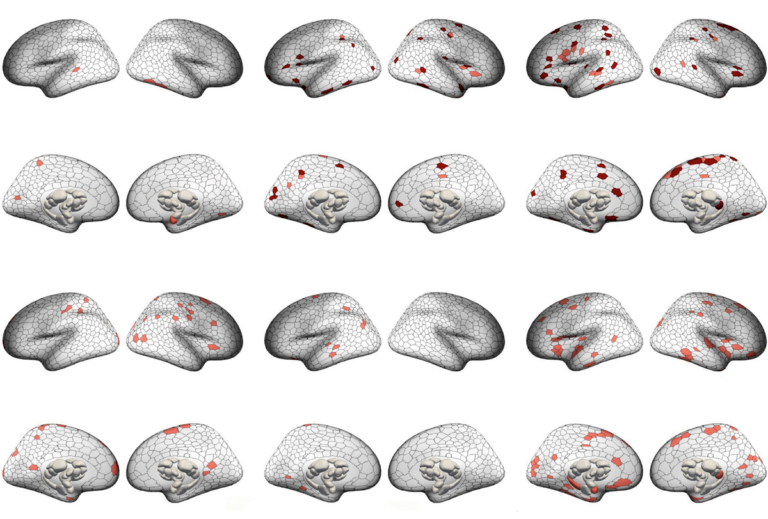
Decades of brain imaging have failed to surface reproducible signatures of autism and other psychiatric conditions, and a new study may explain why: The specific brain areas that are smaller or larger than usual differ across people who share any one of six diagnoses, but those areas tend to connect via overlapping circuits and networks, according to the new work.
The finding “drives home a point that we’ve been skirting around for many, many years,” says Lucina Uddin, professor of psychiatry and biobehavioral sciences at the University of California, Los Angeles, who was not involved with the work. “It’s not likely that we’ll find one or even a couple of brain regions that are the area of dysfunction in any of these disorders, because it’s more likely that there’s big kind of large-scale systems that are dysfunctional in slightly different ways.”
The brain changes associated with individual conditions, including attention-deficit/hyperactivity disorder, autism and schizophrenia, are notoriously variable, previous studies have shown. But the amount of variance from person to person, and whether the associated circuits also show heterogeneity, has been unclear.
To get at this question, the researchers pored over data from 14 MRI studies collected across 25 sites to obtain gray-matter volume measurements for about 1,000 brain areas in 1,294 adults with ADHD, autism, bipolar disorder, major depressive disorder, obsessive-compulsive disorder or schizophrenia, and 1,465 people without any of these conditions.